Ramzan or Id -Ul-Fitr is a Musilm festival celebrated at the end of the Ramadan, the ninth lunar month of the Islamic Calendar, the day following the appearance of the new moon. The holy month of Ramadan, the Muslim month of fasting, is very auspicious to the Muslims the world over.
It is believed that the holy book of the Islamic faith, the Quran, came into existence during this month. Prophet Mohammad who was an illiterate person was chosen by God to be His messenger to compile the holy book. The last ten days are specially significant as the faithful watch for Lailathul Qadr (the Night of Power) during which the revelation of the book to the Prophet was completed. Apart from bringing the Muslims face to face with the hard realities of life like the pangs of hunger, thirst and deprivation, Ramzaan is an annual training period inculcating discipline and declaration of subservience to the laws of God, enumerated in the holy Quran.
The gist of this charming myth goes somewhat like this:
One day Muhammad was sitting alone in the wilderness near Mecca when the Angel Gabriel appeared to him. The Angel commanded Muhammad to read. Muhammad responded "I am not a reader." The Angel Gabriel then taught Muhammad some verses from the Quran, which Muhammad memorized
These revelations continued for 10 days. Islamic scholars believe that the first revelation occurred on the night of the 27th day of Ramadan. This night is called the Laylat-al-Qadr (Night of Power). And according to the Quran, this is when God determines the course of the world for the following year.
The receiving of the Holy Quran is to the Muslims what the receiving of the Ten Commandments from Mount Sinai is to the Jews and Christians
During the Fast of Ramadan strict restraints are placed on the daily lives of Muslims. They are not allowed to eat or drink during the daylight hours. Smoking and sexual relations are also forbidden during fasting. At the end of the day the fast is broken with prayer and a meal called the iftar. In the evening following the iftar it is customary for Muslims to go out visiting family and friends. The fast is resumed the next morning
According to the Holy Quran:
One may eat and drink at any time during the night "until you can plainly distinguish a white thread from a black thread by the daylight: then keep the fast until night"
The good that is acquired through the fast can be destroyed by five things -
the telling of a lie
slander
denouncing someone behind his back
a false oath
greed or covetousness
These are considered offensive at all times, but are most offensive during the Fast of Ramadan
During Ramadan, it is common for Muslims to go to the Masjid (Mosque) and spend several hours praying and studying the Quran. In addition to the five daily prayers, during Ramadan Muslims recite a special prayer called the Taraweeh prayer (Night Prayer). The length of this prayer is usually 2-3 times as long as the daily prayers. Some Muslims spend the entire night in prayer
On the evening of the 27th day of the month, Muslims celebrate the Laylat-al-Qadr (the Night of Power). It is believed that on this night Muhammad first received the revelation of the Holy Quran. And according to the Quran, this is when God determines the course of the world for the following year
When the fast ends (the first day of the month of Shawwal) it is celebrated for three days in a holiday called Id-al-Fitr (the Feast of Fast Breaking). Gifts are exchanged. Friends and family gather to pray in congregation and for large meals. In some cities fairs are held to celebrate the end of the Fast of Ramadan.
IF I HAVE TREAD ON ANY TOES IN PUBLISHING THIS POST, KINDLY BRING IT TO MY NOTICE BY LEAVING A COMMENT. IT IS NOT AND NEVER WAS MY INTENTION TO OFFEND ANY PERSON.
IF U WISH TO LEARN ABOUT THIS HOLIDAY OR ANY OTHER RELIGIOUS HOLIDAY, PLEASE SEARCH AMAZON.COM FROM THE LINKS PROVIDED AT THE TOP OF THIS WEBSITE.
20051024

I am the Dark Lord

Ok this aint an original work of art. I took the basic sketch of the guy in the armor with the sword from a site called artgeek, but I put my face in there myself. And I didnt have any fancy softwares to do it. The only thing I used was MS Paint that comes with your windows Operating System.
20051007
What Happened to the Saraswati
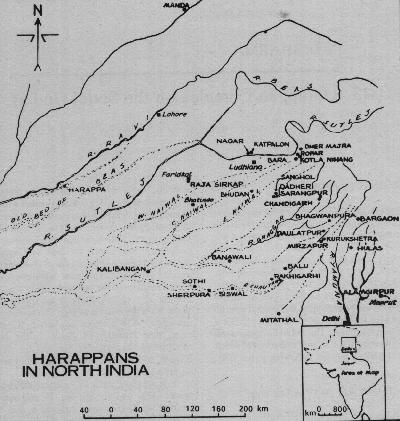
It was purported to be one of the great rivers of the Indian subcontinent, yet no trace of it exists. Well yeah there is a channel in the ground which s said to be a dry bed of the river but the river itself does not exist and it lies a bit to the south west of the Sutlej. It was said to flow from the Himalayas, or the siwaliks to be exact into the Arabian Sea. And there have even been rumors saying that the Rann of Kutch (the vast wasteland that covers the most of north eastern Gujarat) was its mouth into the Arabian Sea. It was said to have supported many ancient cities belonging to the Indus Valley Civilization.
LANDSAT PICTURE OF THE SARASWATI CHANNEL
The channel shown in this pic is about 6-8 km wide this might have been the width of the river (from Siwalik thru Kalibangan and Anupgarh to Marot); present Shatadru (Sutlej) takes a sharp turn at Ropar.
THE SARASWATI IN PUNJAB AND HARYANA
the dotted lines in this picture are the river saraswati. by the looks of it seems to have been a very large river. so the question arises, how such a large river can just disappear seemingly into thin air.
Now we know that this river was very important as it shares its name with the Hindu goddess of knowledge and music. Clearly this river did mean a lot to those who did inhabit its banks. So where did this mighty river disappear?
That remains one of the archaeological mysteries of India.
All material taken fromHINDUNET
The channel shown in this pic is about 6-8 km wide this might have been the width of the river (from Siwalik thru Kalibangan and Anupgarh to Marot); present Shatadru (Sutlej) takes a sharp turn at Ropar.
the dotted lines in this picture are the river saraswati. by the looks of it seems to have been a very large river. so the question arises, how such a large river can just disappear seemingly into thin air.
Now we know that this river was very important as it shares its name with the Hindu goddess of knowledge and music. Clearly this river did mean a lot to those who did inhabit its banks. So where did this mighty river disappear?
That remains one of the archaeological mysteries of India.
All material taken from
20051001
The Gayatri Mantra
The most revered mantra in Hinduism is the Gayatri mantra. Said to be composed and written long ago by a sage by the name of Vishwamitra, the mantra is personified by the goddess Gayatri, or Savitri also known as Veda Mata (mother of the Vedas, the Vedas are the holy scriptures of the Hindu religion). This mantra is taken from the Rig Veda (the Vedas are four in number the Rig, Yajur, Atharva, and Sama, in chronological order) and is considered to be the essence of the Vedas. It is a sacred prayer to illuminate the universe and describes the unity of the multiform universe. The mantra is indicative of meditation, praise and prayer at the same time. The reigning deity of the Gayatri mantra is the Sun and the scriptures enjoin the Hindus to recite it morning noon and night to cancel out evil and bad tendencies.
While praising the Supreme Being, the chanter of the mantra meditates and prays for the rise of real intelligence within to understand creation and transcend the worldly preoccupations and attain union with the Brahman (otherwise known as nirvana or Moksha).
The Gayatri mantra is as follows:
Aum Bhurbuvaswaha
Tat Savitur Varenyam
Bhargo Devasya Dheemahi
Dheeyoyonah Prachodayat
The meaning of each word in the mantra:
The first 3 lines or the first nine words describe the nature of the supreme being
Aum: The sacred symbol which is said to describe the heavens in totality
Bhurbuvaswaha: This is the compound of the following three words
• Bhuh: The earth or the physical plane of existence;
• Bhuva: The atmosphere or the ethereal or the astral plane of existence;
• Swaha: Heaven or the celestial or the causal plane of existence;
Tat: It means “that”. The supreme being is simply referred to as “that” for it evades all attempts at explanation;
Savitur: The divine powers of the sun; equated to Savitri, one of the forms of the mother goddess;
Varenyam: The best
Bhargo: Radiance, Effulgence, Illumination;
Devasya: Divine Radiance or Grace (of the supreme being)
The rest of the verse (the last line) constitutes the prayer:
Dheemahi: We contemplate or meditate upon
Dheeyoyonah: This is the compound of the following three words
• Dheeyo: The intellect
• Yo: Who
• Nah: Our
Prachodayat: Requesting, Urging Praying.
English verse form:
Aum;
We meditate on heaven, sky and earth
On the supreme spirit
Whose divine radiance and grace
Like the sun are most excellent
Constantly urging and praying
To guide and impel our intellect
The first line starts with Aum which is the sacred syllable or word as a benedictory prelude and sanction. Scientists world over have associated this age old Hindu belief that this is the sound of the universes with the background radiation that is picked up by radio telescopes. They have speculated that this might be the remnant of the big bang. Bhurbuvaswaha refers to the three planes of existence- the physical, astral and celestial.
The second and third lines describe the Brahman supreme spirit and it various attributes and qualities. It invokes the supreme spirit as an embodiment of knowledge and light. The fourth line implores the Brahma- the supreme spirit to guide, impel and enlighten us as humans.
20050909
The Story Of Lord Ganesha
Before narrating this it would be helpful if I introduce some of the gods of the hindu pantheon.
Brahma:
The hindu god of creation
Vishnu:
The hindu god of sustenance, he maintains righteousness among us humans. Whenever we did stray too far from the path of righteousness he came down on earth as one of his avatars (yes avatar is an Indian word). They are Matsya, Koorma, Varaha, Narasimha, Vamana, Parasurama, Rama, Balarama, Krishna and Kalki.
Shiva:
The hindu god of destruction, he is the one who dances the divine dance called the tandav, which is the eternal dance of creation and destruction.
Nandi:
Lord Shiva's steed, an ox.
Ganesha:
Also known as Vinayaka, Vighneswara, Gajanana etc. He has 108 names and is known in the west as the Elephant God.
Well. It all started when Gajasura (a demon with the head of an elephant) did pennance to be able to see lord Shiva. And since Shiva is easy to please, he appeared in front of Gajasura and said, "Demand whatever you wish for and you shall have it." To this Gajasura said that he wanted Shiva to live forever in his stomach. Thenceforth, Shiva started living in his stomach.
Then, Shiva's wife, the Goddess of beauty and health, Parvathi, went to lord Krishna (one of lord Vishnu's avatars) and sought his help to facilitate the return of her husband. Now, Krishna took Nandi, and decorated him as a show animal and went to Gajasura and set up a show for him. At the end of the show Gajasura was so pleased that he told the showman (lord Krishna in disguise) that he would grant any wish asked of him. To which lord Krishna replied, “This is no ordinary ox, he is the great Nandi who seeks his master who happens to be trapped in your belly.” It was then that Gajasura realised that the showman was actually Krishna, and that his death was inevitable. He then spoke to Shiva who was in his stomach and said, “I will set you free, but I want one favour in reurn. I want you to make it such that my head is worshipped in all three worlds (heaven, hell and earth). Then, Nandi tore his stomach open with his horns and freed his master, lord Shiva. Shiva collected the head of Gajasura and went on his way to Kailasa which is his abode.
Hearing of her husband’s return, the overjoyed Parvati decided to bathe. In those days, when this story was written, the husk of several edible pulses and gram were used to bathe with in lieu of soap. She had already applied this powered mixture on her body, before She went to rinse off, She took some of the dired powder off her body and made a small figure of a young boy. She breathed life into the figure, and left the child to guard the door while She attended to herself.
While she was bathing, Shiva returned. But the guardian at the door didn’t let him in. So he took his trishool (trident), and decapitated the kid. When She heard of this, She asked her husband to bring him back to life. So He attached the head of Gajasura to the body of the child and rekindled the life that he had taken. Thus was born their first child by the name of Gajanana (the one with the head of an elephant). In the due course of time Gajanana grew up and acquired as his steed a mouse by the name of Anindya. It is this comic and affable picture of him that has made him close to many hearts. Although many hindus have ishta devatas (favourite gods), there are very few of them who do not worship Gajanana.
Sometime in between Shiva and Parvati had their second child by the name of Kartik who is the Hindu god of war; he has for his steed a peacock. One fine day, all the gods decided that they needed one of them to exclusively see to it that no one faced any hurdles in her/his life. Kartik said that his pot bellied mouse riding brother would be unfit for the task so it should be given to him.
Then the gods decided that whoever would bathe in all the holy rivers in the three worlds (heaven, hell and earth) and return the first would be given the task. Then the crestfallen Gajanana realised that he would be unable to complete the required test, so he recited a mantra and circled his parents in a clockwise direction (this is called a pradakshina and it is an expression of devotion). As a result, whenever Kartik entered a river to bathe, he would see that Gajanana had finished his ritual and was leaving the river. It was then that he realised the greatness of his brother and withdrew his claim to the position.
On the fourth day after the new moon in the month of Bhadrapada, Gajanana was conferred with the title of Vighneswara (remover of obstacles). His devotees world wide prepared a feast for this occaision to congratulate him. He visited each house and gorged himself on all the sweets and other items prepared by them and fed some to his steed. As he was undertaking the long and arduous journey back to his abode, he cast a very very comic picture and the moon could not help himself so he laughed out loud.
Overcome by embarassment, Vighneswara failed to notice a bump in the road and tripped and fell, his belly burst and all his innards were scattered all over the ground. Parvati blamed the moon for her son’s death (the gods later revived him) and said that anyone looking at the moon would be mowed down by unfounded accusations. So all the righteous people in the world, whoever saw the moon incurred heavy sins. When requested by the other gods, She decreased the curse saying that whoever saw the moon on the fourth day after the new moon in the month of Bhadrapada without listening to the story of Vigneswara, would incur unfounded sins.
On one such day, lord Krishna (one of the avatars of Lord Vishnu, the god of maintenance) saw the moon in a reflection in a milk platter while he was drinking. He then realised that he would have to go thorugh some unpleasant ordeal or the other. And he did:
A king by the name of Satrajit had in his posession a Mani (jewel) which used to create a lot of gold each day and Krishna asked for it. Quite obviously he refused. One day Satrajit’s brother Prasena took the Mani and went on a hunting trip. In the forest, a lion saw the Mani and mistaking it for meat, killed Prasena and took it. Later, a bear by the name of Jambavan killed the lion and took the Mani from it and gave it to his daughter. The blame for Prasena’s death was laid on Krishna. So Krishna vowed to find out what happened of Prasena and the Mani.
In the forest, he found Prasena’s corpse, and a little further he found the Lion’s corpse and from there the footprints of Jambavan leading up to his cave. In the cave he found Jambavan’s daughter Jambavati playing with the Mani. When he snatched the Mani from her, she started crying her heart out. And Jambavan came there immediately to find the Mani in Krishna’s hands. Jambavan and Krishna started fighting. Twenty one days later, they were still fighting and and Jambavan’s strength started waning. He then remembered that when he helped lord Rama, he asked of him the boon to fight him, he then realised that Krishna was an avatar of the same. He begged for Krishna’s pardon, and gave him the Mani. He also realised that he would not be able to find a better man than Krishna and so he offered him his daughter in marriage.
When he returned to Satrajit’s palace with the Mani, Satrajit was so overjoyed that he not only gave the Mani to Krishna, he also offered to him his daughter’s hand in marriage.
So, Krishna, even though he was a god had to go through all that trouble just because he looked at the moon (accidentally albeit) before hearing this story on the fourth day after new moon in the month of Bhadrapada.
Disclaimer:
To some of you, this story might come across as being male chauvinistic. I have no hand in it being so. This story was originally written in sanskrik on the far side of two thousand years ago. During this period it had gone through many different translators some of whom might have been male chauvinists. It is my firm beleif that the original text was not of this nature at all.
Subscribe to:
Posts (Atom)
Subscribe To Me


 Posts
All Comments